
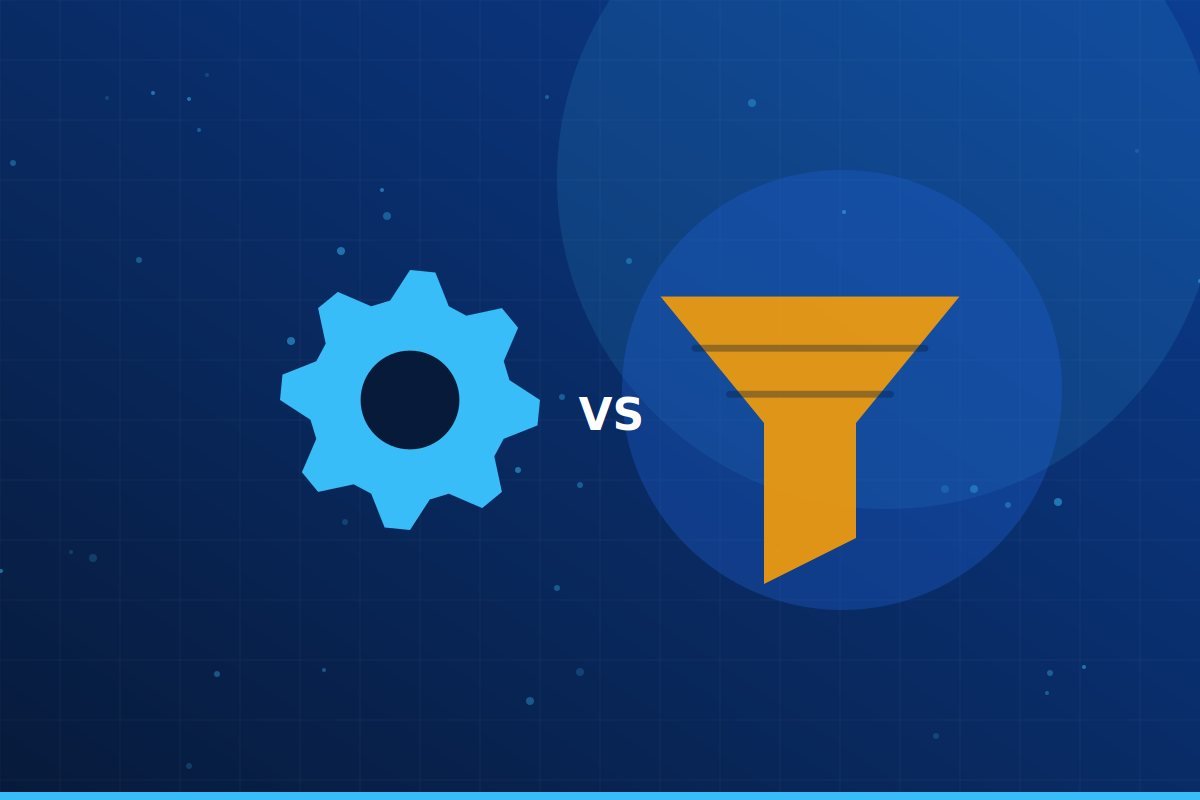
Marketing Automation Isn't the Same as Your CRM — Here's the Difference
A CRM is a record of who your contacts are and where they stand. Marketing automation is the system that acts on that record — sending the right email, at the right time, based on what a contact just did.
Where teams get stuck is trying to run automation logic inside a CRM that was never built for it, or trying to store long-term customer history inside a marketing tool that treats every contact as a campaign target.
What a CRM is actually for
A CRM's job is to be a reliable record: who this person is, what they've bought, what stage a deal is in, who last talked to them and what was said. It's built around individual relationships and deal-by-deal detail, which is exactly what a sales team needs when they're managing a manageable number of active conversations by hand.
What a CRM generally isn't built for is acting automatically, at scale, the moment a contact does something specific — visits a pricing page, opens an email three times, abandons a form halfway through. That kind of behavior-triggered response is a different job entirely.
What marketing automation is actually for
Marketing automation exists to act on behavior, automatically, across a large number of contacts at once. It watches for triggers — a form submission, a page visit, an email open — and responds with the appropriate next step: an email sequence, a lead score change, a notification to sales that someone just became worth a call.
It's built for volume and consistency, not individual nuance. It doesn't know your best customer's kid just started college, and it isn't supposed to. That's the CRM's job.
Where the confusion causes real damage
Teams get stuck in one of two directions. Some try to force a CRM to do marketing automation's job — building clunky workflow rules inside a tool that was never designed for behavioral triggers at scale, and ending up with something fragile that breaks the moment volume increases.
Others do the opposite: they run everything through the marketing automation platform, including long-term relationship history, and end up with a system that treats a ten-year customer the same as someone who downloaded a PDF once and never came back.
A concrete example
A contact fills out a demo request form. Marketing automation should immediately fire off a confirmation, start a short nurture sequence if the demo isn't booked within a day, and notify sales the moment the form is submitted. The CRM's job starts the moment sales picks up that lead — logging the call, tracking the deal stage, holding the history of every conversation from there forward.
When these two systems aren't properly connected, one of two things happens: sales doesn't find out about the lead until it's gone cold, or marketing keeps emailing someone who already closed a deal three weeks ago because nobody told the automation platform the deal was won.
How to connect them properly
The fix usually isn't buying a new tool. It's clarifying which system owns which job, then connecting them so a lead's behavior in one place actually triggers the right response in the other — a form fill in the marketing platform creates or updates the CRM record automatically, and a deal stage change in the CRM stops or starts the right automation sequence.
In a properly connected setup, a salesperson never has to manually check whether marketing already emailed a lead three times this week, and marketing never has to guess whether a contact already closed. The systems share status in real time, so each one only does the part of the job it was actually built for.
Signs your systems aren't properly connected
A few patterns tend to show up consistently when a CRM and marketing automation platform aren't talking to each other correctly: sales complaining that leads arrive with no context on what the prospect actually looked at or clicked, marketing sending promotional emails to people who are already mid-negotiation with a rep, and duplicate or conflicting records because updates in one system never make it to the other.
Any one of these on its own might look like a minor annoyance. Together, they're usually a sign that the integration between the two systems was set up once, early on, and never revisited as the business grew.
Getting started
The cleanest way to start is mapping out, on paper, exactly where a lead's information should live at each stage — inquiry, nurture, active deal, closed customer — and which system is responsible for acting at each of those points. Once that's clear, connecting the two tools is usually a matter of a handful of integration rules, not a platform overhaul.
Want to see this applied to your business?
Book a free consultation and we'll walk through what's realistic for your team.
Book a Free ConsultationRelated posts
 Industry Insights
How AI Automation Is Changing Property Management
Property managers are quietly automating the parts of the job that used to eat every afternoon — here's what that actually looks like in practice.
July 14, 2026 5 min read Digital Marketing
5 SEO Mistakes Local Businesses Make
Most local SEO problems aren't technical — they're the result of a handful of avoidable, repeated mistakes.
June 2, 2026 4 min read
Get insights in your inbox
One email a month — practical automation and marketing notes, no fluff.