
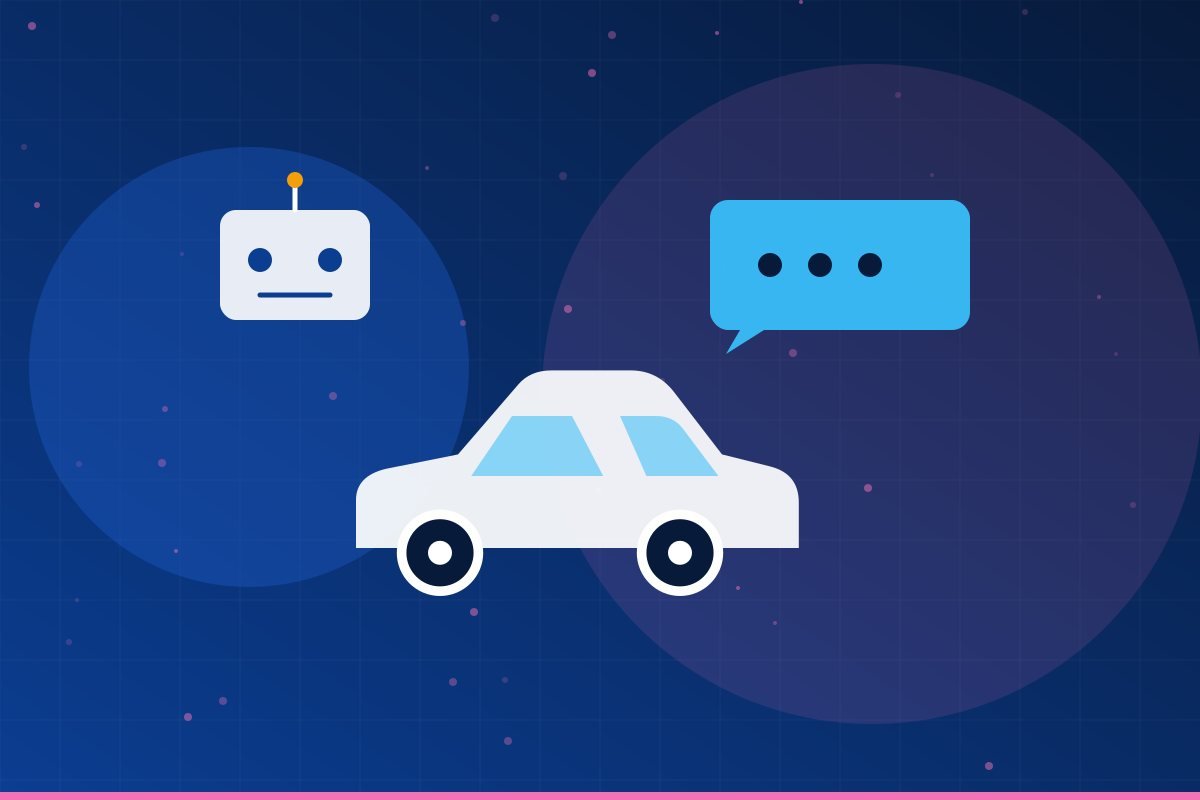
Why Auto Dealerships Are Adopting AI Chatbots
A large share of service-bay calls come in outside business hours — after work, on weekends, right when a warning light comes on. If no one answers, most callers don't leave a voicemail. They call the next dealership.
AI chat and voice agents close that gap. They can check service availability, quote a rough estimate range, and book the appointment directly into the shop's scheduling system, all without a staff member on the line.
The after-hours problem, in practice
Service departments generally operate on a fairly narrow window — roughly business hours, five or six days a week. Car problems don't follow that schedule. A warning light that comes on during a Saturday errand run, or a noise someone notices on the drive home from work, tends to prompt an immediate search for the nearest dealership, often well outside the hours anyone is there to answer.
When that call goes unanswered, the default customer behavior isn't patience — it's moving to the next result. Recovering even a modest share of those after-hours contacts, which would otherwise be lost entirely, tends to be one of the fastest-paying-off automation workflows a service department can put in place.
What the AI agent actually does
The workflow itself is straightforward. A customer calls or messages after hours, describes the issue or the service they need, and the AI agent checks real-time availability against the shop's actual scheduling system — not a static calendar that's out of date by Tuesday. It can quote a rough estimate range for common services, answer basic questions about what a visit typically involves, and book the appointment directly, sending a confirmation the same way a human advisor would.
If the conversation moves into territory the agent isn't confident handling — an unusual complaint, a warranty question, a frustrated customer — it hands off clearly, flagging the conversation for a human to pick up first thing when the department opens, rather than leaving the customer to start over from scratch.
Beyond booking: parts, recalls, and reminders
Once after-hours booking is working, the same underlying system tends to extend naturally into a few adjacent workflows. Parts availability lookups are a common one — instead of an advisor spending time on hold with the parts counter mid-call, the AI agent checks availability against the dealership's DMS directly.
Recall notices and routine service reminders are another. Left to manual outreach, these tend to go out inconsistently, if at all, simply because no one owns the task consistently. Automating that outreach on a fixed schedule turns it into a small, steady source of bookings rather than a task that quietly falls off everyone's list.
Does this replace service advisors?
This is the most common objection, and a fair one. In practice, the workflow is built around the calls and messages that would otherwise go completely unanswered — after hours, during peak call volume, or when every line is already busy. It isn't replacing the conversations advisors already have during business hours; it's catching the ones that used to simply disappear.
What to measure
Dealerships that track this closely tend to watch a small number of specific numbers: the number of after-hours bookings recovered per month, how many of those show up for the appointment, and whether inbound call volume during business hours actually drops as more routine questions get handled automatically before the phone even rings.
It's worth tracking show-rate separately from bookings, since a booking made at midnight through an automated flow is only useful if the customer actually shows up. In practice, confirmation and reminder messages sent automatically ahead of the appointment tend to keep show-rates comparable to bookings made the traditional way over the phone.
A note on customer experience
The dealerships that get the most value out of this treat the AI agent as a genuine extension of the service desk, not a wall between the customer and a human. That means the handoff to a person has to be smooth and well-timed — the agent should recognize quickly when a conversation needs a human, rather than trying to force every interaction through the automated flow regardless of complexity.
Customers generally don't mind talking to an AI agent for a straightforward booking. What frustrates them is a system that can't recognize its own limits and keeps them stuck in a loop when they actually need to talk to a person.
Getting started
The typical starting point is after-hours booking alone, since it's the clearest, fastest-to-prove workflow and doesn't require touching how the service desk operates during the day. Parts lookups, recall automation, and broader reminder campaigns tend to follow once that first workflow is live and trusted.
Want to see this applied to your business?
Book a free consultation and we'll walk through what's realistic for your team.
Book a Free ConsultationRelated posts
 Industry Insights
How AI Automation Is Changing Property Management
Property managers are quietly automating the parts of the job that used to eat every afternoon — here's what that actually looks like in practice.
July 14, 2026 5 min read Digital Marketing
5 SEO Mistakes Local Businesses Make
Most local SEO problems aren't technical — they're the result of a handful of avoidable, repeated mistakes.
June 2, 2026 4 min read
Get insights in your inbox
One email a month — practical automation and marketing notes, no fluff.